

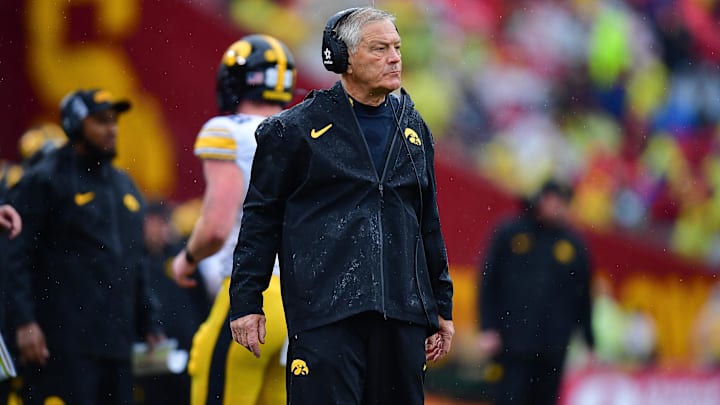
In a nod to what Kirk Ferentz and the coaching staff have built at Iowa, once players enter the program, they don't leave.
The Iowa program traditionally does not load up on transfers, and, on the flip side, it does not lose many players to the portal.
The foundation of the program under Ferentz has been built on heavy recruitment and finding the right players for the system, regardless of how high a prospect is ranked.
Outside of what Curt Cignetti has done at Indiana, there is an argument to be made that Ferentz has done more with less.
There has been no change this year, as Iowa is at the top of the Big Ten in the fewest amount of players lost to the transfer portal.
With 2 days left in the portal, 428 players have entered from the Big Ten, per numbers from @On3 and @247Sports.
— Scott Dochterman (@ScottDochterman) January 15, 2026
At this time, 262 have new homes and 15 have withdrawn. B1G teams have 312 new arrivals.
A few numbers:
Most entries: Penn State 49, Michigan State 41; Lowest: Iowa… pic.twitter.com/ewM7szZols
According to the Athletic's Scott Dochterman, numbers from 247Sports and On3 Sports show that with only two days left in the transfer portal window, 428 players from the Big Ten have entered.
Of the 428 players who have entered, only eight are from the University of Iowa. That is the fewest amount by any team in the Big Ten, with Indiana sitting in a close second with nine.
Once Iowa gets players into the system, they stay
The development within the Iowa program is world-class, and players know that.
Iowa does not always sign a multitude of four- and five-star recruits; it just finds the right players and develops them in its system.
In Ferentz's 27 years at the helm of the Hawkeyes, 94 players have been drafted by the NFL, and there are currently 28 Hawkeyes on active rosters.
The program's coaching stability and development are major selling points, and more players are starting to take notice.
The current landscape of college football does not encourage players to stay with a program if there are better opportunities elsewhere, but the Iowa program is bucking that trend.
 Add us as a preferred source on Google